


 Download Aplikasi Rumah123
 Cari Agen
 Aset Bank
 Explore
 Berita
 Bantuan
 Download Aplikasi
Choosing Schools in Jakarta vs Bali: What Parents Should Consider
Published on April 21, 2026 · 10 min read · by Yongky Yulius
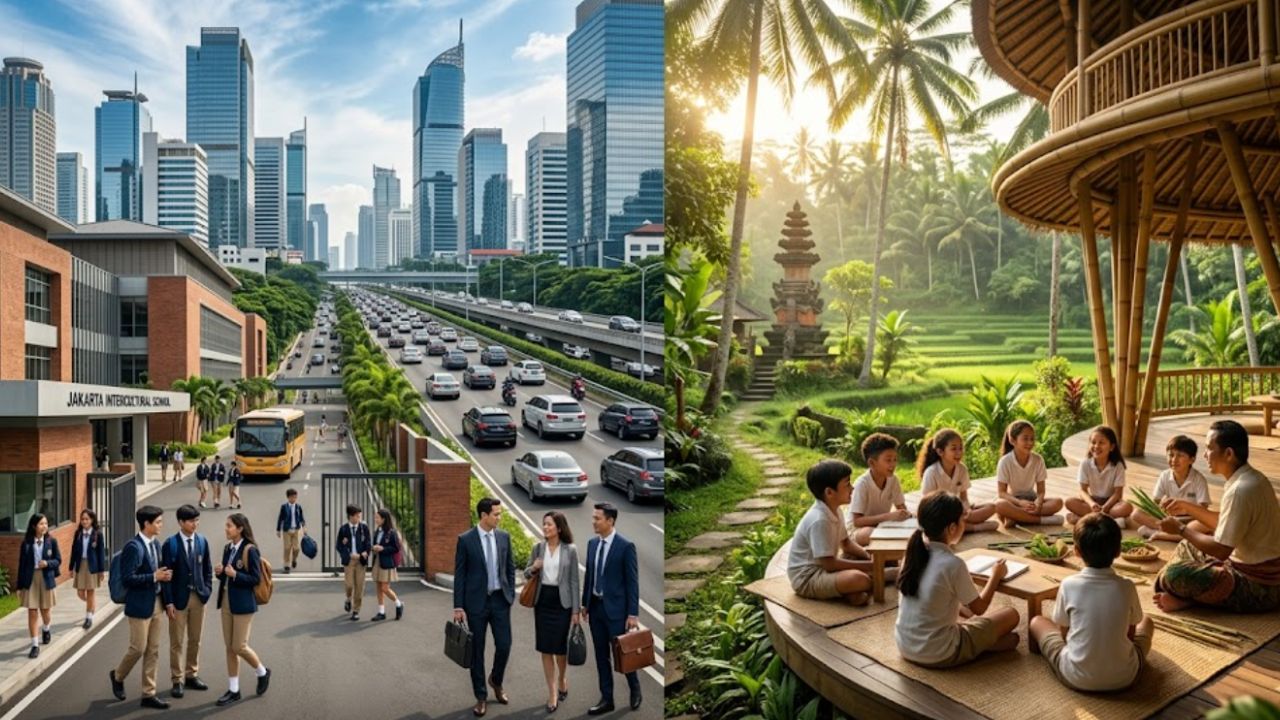
For many expat families, the move to Indonesia isn’t just a career shift—it’s a total lifestyle pivot.
But once the initial excitement of tropical living settles, one question inevitably takes center stage:
“Where will the kids go to school?”
The answer often depends on which version of Indonesia you’ve chosen to call home.
Whether you’re navigating the high-energy skyscraper canyons of Jakarta or the lush, sun-drenched coastal paths of Bali, the educational landscape is as diverse as the islands themselves.
In this guide, we break down the key differences between schooling in Jakarta and Bali to help you find the perfect fit for your family’s next chapter.
1. Curriculum & University Pathways

Jakarta: The Fast Track to Global Ivy Leagues
Jakarta is the heavyweight champion of academic rigor. Most top-tier schools here are designed as “feeder schools” for prestigious universities in the US, UK, and Australia.
- The Curricula: You’ll find the “Big Three” here: IB (International Baccalaureate), British (IGCSE/A-Levels), and American Standard.
- The Vibe: It is highly competitive. Schools like Jakarta Intercultural School (JIS) and British School Jakarta (BSJ) have dedicated college counseling departments that rival those in Europe or North America.
- Best For: Parents who want a structured, high-pressure environment that ensures their children are ready for the world’s most competitive universities.
Bali: The Hub for “Future-Proof” Learning
Bali has carved out a niche as a global leader in progressive education. While academic standards remain high, the way students learn is radically different.
- The Curricula: While Bali Island School offers the traditional IB continuum, many families move to Bali specifically for “alternative” pathways. Green School Bali, for example, focuses on sustainability and entrepreneurship alongside core subjects.
- The Vibe: It’s more about “learning by doing.” Students might spend the morning in a bamboo classroom and the afternoon working on a community plastic-recycle project.
- Best For: Parents who value creative thinking, emotional intelligence, and environmental consciousness as much as (or more than) traditional test scores.
Related article: Top Curriculum in Indonesian International Schools for Expat Families
2. Reputation & Accreditation

Unsplash/CDC
Jakarta: The Titans of Accreditation
In Jakarta, reputation is built on decades of history and rigorous external validation. The “big” schools are essentially institutions within the city.
- Gold Standard Accreditations: Most top-tier Jakarta schools are accredited by WASC (Western Association of Schools and Colleges) or CIS (Council of International Schools).
- The “Big Three” Reputation: Names like JIS, BSJ, and Nord Anglia (NIS) carry immense weight. Their reputations are built on high-performance metrics, massive alumni networks, and a “corporate” level of organization.
- Safety Net: Because these schools have been around for 50+ years, they offer a sense of stability. You know exactly what you are getting: a world-class, standardized educational experience.
Bali: The Rise of Niche Prestige
Bali’s reputation is younger but arguably more “famous” on the global stage for innovation. It’s the place for parents who find traditional prestige a bit outdated.
- Innovative Credentials: While schools like Bali Island School (BIS) hold the prestigious IB World School status, others like Green School Bali have gained a global reputation through endorsements from figures like Ban Ki-moon and Jane Goodall.
- The “Community” Validation: Reputation in Bali often spreads through the “digital nomad” and “entrepreneur” networks. It’s less about a centuries-old crest and more about the school’s alignment with modern values like sustainability and mindfulness.
- Accreditation Check: While most major Bali schools are accredited, some newer “micro-schools” or “learning centers” may not have the same level of formal accreditation as Jakarta’s giants. Parents must do extra due diligence if they plan to move back to a traditional system later.
3. Educational Philosophy & Learning Style

Jakarta: The “Corporate” and Competitive Excellence
The philosophy in Jakarta is largely performance-driven and structured. Since the city is a global business hub, the schools reflect that same high-achieving energy.
- Learning Style: Classroom-based, tech-heavy, and structured. Students are trained to master complex subjects, excel in public speaking, and navigate multicultural social hierarchies.
- The “Micro-Society”: Schools like JIS or BSJ function like mini-universities. The philosophy is about “Global Citizenship”—preparing kids to be leaders in a professional, interconnected world.
- Extracurriculars: Expect world-class Model United Nations (MUN) teams, high-tech robotics labs, and competitive varsity sports leagues (like IASAS).
Bali: The “Green” and Holistic Revolution
Bali’s educational philosophy is often student-centric and experiential. The island has become a sanctuary for those fleeing the “rat race,” and the schools reflect this desire for balance.
- Learning Style: Inquiry-based and “wall-less.” In Bali, a math lesson might involve calculating the flow of a river, and science might be learned in a permaculture garden.
- The “Whole Child” Approach: The focus is on Mindfulness, Sustainability, and Creativity. The philosophy suggests that a child who is emotionally regulated and environmentally aware will naturally become a successful adult.
- Alternative Innovation: Schools like Green School Bali or ProEd emphasize “entrepreneurial learning,” encouraging students to launch their own social enterprises or environmental projects before they even graduate.
4. Total Cost of Education

Jakarta: The Premium Standard
Jakarta is home to the most expensive schools in the country. Because these institutions offer massive campuses and fly in highly specialized expatriate teachers, the costs reflect a “no-expense-spared” model.
- Tuition Fees: Expect to pay between $20,000 and $35,000 USD per year for secondary school at top-tier institutions like JIS or BSJ.
- The “Capital Levy” (Building Fund): This is a unique feature in Jakarta. Many schools require an annual “Development Fee” or a one-time “Capital Levy Certificate” (often around $3,000 – $5,000 USD per year) to maintain their world-class facilities.
- Hidden Costs: Don’t forget the high cost of extracurricular travel (sports tournaments across Asia), premium school bus services (essential for navigating Jakarta traffic), and uniform sets.
Bali: The Wider Spectrum
Bali offers more flexibility. While there are premium schools that rival Jakarta’s prices, there is also a growing market of “mid-tier” schools and learning centers that are more budget-friendly.
- Tuition Fees: Premium schools like Green School or Bali Island School range from $15,000 to $25,000 USD per year. However, several high-quality boutique schools offer programs in the $8,000 – $12,000 USD range.
- Entry Fees: Enrollment fees (Registration) are standard, but the “Building Funds” are often slightly lower or more flexible than in the capital.
- Lifestyle Savings: While tuition is a major hit, the “incidental” costs in Bali—like school lunches or social events—tend to be more affordable than the high-end mall culture of Jakarta.
Related article: School Fees vs Cost of Living in Indonesia: What Expat Families Need to Know
5. Daily Access & Logistics
Unsplash/Afif Ramdhasuma
In the world of Indonesian real estate, there is a golden rule: Live where you learn. Whether you are in Jakarta or Bali, your daily happiness will largely depend on the distance between your front gate and the school drop-off zone.
Jakarta: Navigating the “Macet”
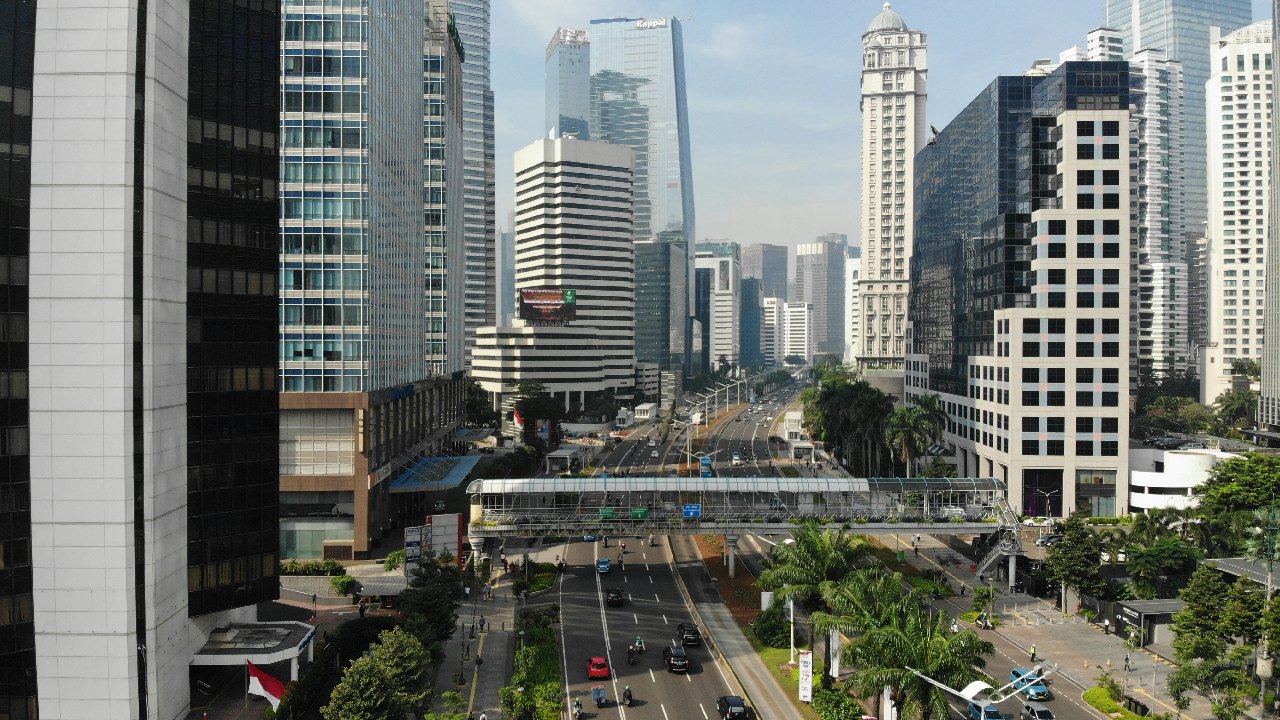
In Jakarta, distance is measured in minutes, not kilometers. A 5km trip can take 10 minutes or 50 minutes depending on the rain and the time of day.
- The School Bus Culture: Most top-tier schools provide highly organized, GPS-tracked bus services. While convenient, it often means an early start—some kids are on the bus by 6:15 AM to beat the morning rush.
- The “School Pocket” Neighborhoods: To maintain sanity, most expats focus their Rumah123 search on specific hubs:
- Pondok Indah/Cilandak: For Jakarta Intercultural School (JIS).
- Bintaro/Serpong: For British School Jakarta (BSJ).
- Kemang: Centrally located for several boutique international schools.
- Logistics: You will likely need a dedicated car and driver. The “drop-off” culture is a major social touchpoint, but it requires military-grade timing.
Bali: The Scooter and Shortcut Life
Bali’s logistics are more “island-style,” but don’t be fooled—areas like Canggu and Ubud have their own unique traffic challenges.
- The Rise of the Scooter: It is very common to see expat parents (and older students) navigating Bali on scooters to bypass car bottlenecks. It’s faster, but it requires a “tropical” mindset (and a good poncho for the rainy season).
- Walking Communities: Some areas, like Sanur, are much more pedestrian-friendly. If you find a villa near Bali Island School, a morning walk to school is actually a realistic possibility.
- The “Banjar” Factor: Local ceremonies can occasionally close roads in Bali. Unlike Jakarta’s predictable rush hour, Bali’s traffic can be spontaneous, adding a bit of “adventure” to the school run.
6. Expat Community & Networking

Sumber: Freepik.com/Freepik
Jakarta: The Power Networking Hub
In the capital, the expat community is largely centered around the corporate, diplomatic, and oil-and-gas sectors. The networking here is “high-level” and often feels like an extension of professional life.
- The “PTA” Power: Parent-Teacher Associations in Jakarta’s big schools are legendary. They organize massive galas, charity balls, and high-end cultural events.
- Professional Synergy: It’s common for parents to meet at a school soccer match and discover they are both Regional Directors for multinational companies. Networking is efficient, structured, and happens at country clubs or five-star hotel lounges.
- The “Bubble” Advantage: Because Jakarta is a sprawling megacity, the school community provides a vital “safety net” and a sense of belonging in an otherwise overwhelming environment.
Bali: The Entrepreneurial & Creative Tribe
The Bali community is more eclectic and decentralized. It’s a melting pot of digital nomads, sustainability advocates, “impact” investors, and families seeking a lifestyle reset.
- Casual Networking: Networking in Bali happens in “barefoot” luxury. You’re more likely to discuss a new startup or a crypto venture over a coconut at a beach club or a vegan cafe after drop-off.
- Diverse Backgrounds: Unlike Jakarta’s corporate lean, Bali attracts a creative crowd. Your “school run” peers might include world-class photographers, tech founders, or wellness experts from every corner of the globe.
- The “Global Village” Vibe: Schools like Green School Bali act as a magnet for people with a specific worldview. This creates a very tight-knit, passionate community that feels more like a “tribe” than a social club.
Related article: Expat Community in Bandung: What to Know Before You Move
Decision Framework: Which School Destination Fits Your Family?
Choosing between Jakarta and Bali isn’t just about the school; it’s about aligning your career goals, child’s personality, and financial strategy. Use the following steps to evaluate your move.
Step 1: Identify Your Primary Goal
Ask yourself: What is the “North Star” for my child’s education right now?
-
If it’s Academic Prestige & University Entry: Focus on Jakarta. The competitive environment and standardized success metrics are designed for high-stakes university placements.
-
If it’s Personal Growth & Well-being: Focus on Bali. The holistic approach favors emotional intelligence, creativity, and a slower pace of life.
Step 2: Assess Your Daily “Quality of Life” Tolerance
How do you want your Tuesday morning to look?
-
Option A: A structured commute in a comfortable car/bus, living in a modern high-rise or gated community, with world-class malls nearby. (Jakarta)
-
Option B: A scenic scooter ride, living in an open-air villa, with beach sunsets and a casual “sand-between-the-toes” lifestyle. (Bali)
Step 3: The “Three-Year Plan” Test
Where do you see your family in 3 to 5 years?
-
The Corporate Nomad: If you expect to move to another global financial hub (Singapore, London, NYC), Jakarta’s accredited schools offer the most seamless credit transfers.
-
The Lifestyle Settler: If you are looking to step away from the traditional corporate ladder and perhaps start a business or work remotely long-term, Bali offers a community of like-minded individuals.