

 Download Aplikasi Rumah123
 Cari Agen
 Aset Bank
 Explore
 Berita
 Bantuan
 Download Aplikasi
International Preschool vs Kindergarten in Indonesia: Key Differences Every Parent Should Know
Last updated February 18, 2026 · 6 min read · by Yongky Yulius
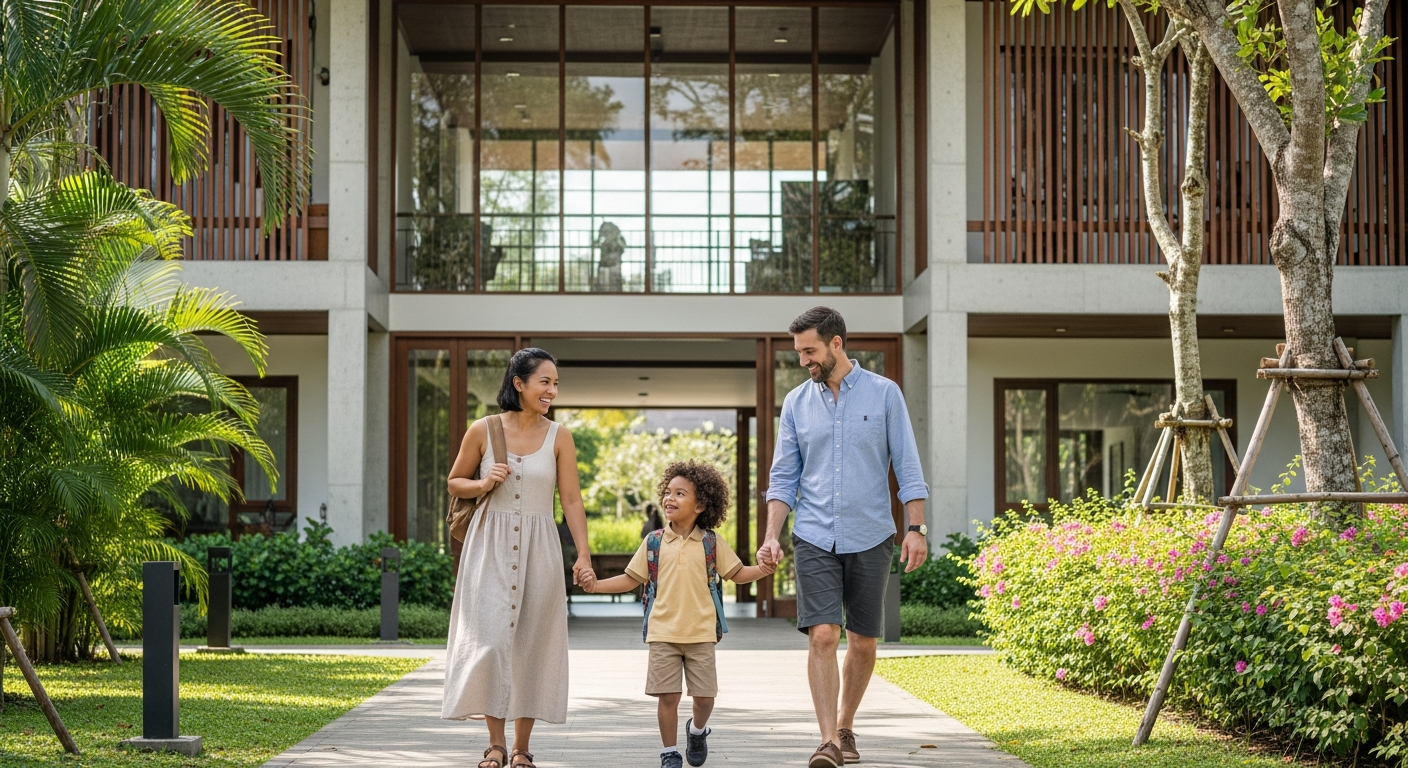
Is your child ready for the structured environment of an International Kindergarten, or is a play-centric Preschool the better fit for their current developmental stage?
In Indonesia, international schools offer a variety of curricula—from IB to British and American systems—each defining early childhood education differently.
To help you make an informed choice for your family’s new chapter, we’ve outlined the fundamental differences in curriculum, age requirements, and learning objectives between Preschool and Kindergarten in the Indonesian international sector.
In this article:
Understanding Early Childhood Education in Indonesia: An Overview
Navigating the educational landscape in a new country can feel like learning a second language.
In Indonesia, early childhood education—locally known as PAUD (Pendidikan Anak Usia Dini)—is a vibrant and diverse sector, especially in major urban centers like Jakarta, Surabaya, and Bali.
For expat families, the system generally split into two pathways: National/National Plus schools and International schools.
While local systems are governed by the Ministry of Education, International schools often follow global frameworks (such as the British, American, or IB systems).
What makes the Indonesian landscape unique for expats?
- Terminology Overlap: You will often hear terms like Kelompok Bermain (Playgroup) and Taman Kanak-Kanak (Kindergarten) used alongside international terms. In the international sector, the focus is less on local bureaucracy and more on global transitions.
- The “School-Home” Radius: Due to the logistical challenges of Indonesian traffic, the concept of “neighborhood schools” is vital. Most expat families prioritize finding a residence within a 5-to-10-kilometer radius of these institutions to ensure a balanced lifestyle for their children.
- Cultural Integration: Even in international settings, many schools in Indonesia incorporate a “Global-Local” approach, introducing children to the rich Indonesian culture and language while maintaining international academic standards.
International Preschool vs. Kindergarten: Key Differences Every Parent Should Know
Understanding this foundation is the first step in deciding whether your child belongs in a fluid, play-based Preschool environment or the more structured world of Kindergarten.
1. Core Focus: Social Discovery vs. Academic Readiness
The primary distinction lies in the “why” behind the daily activities.
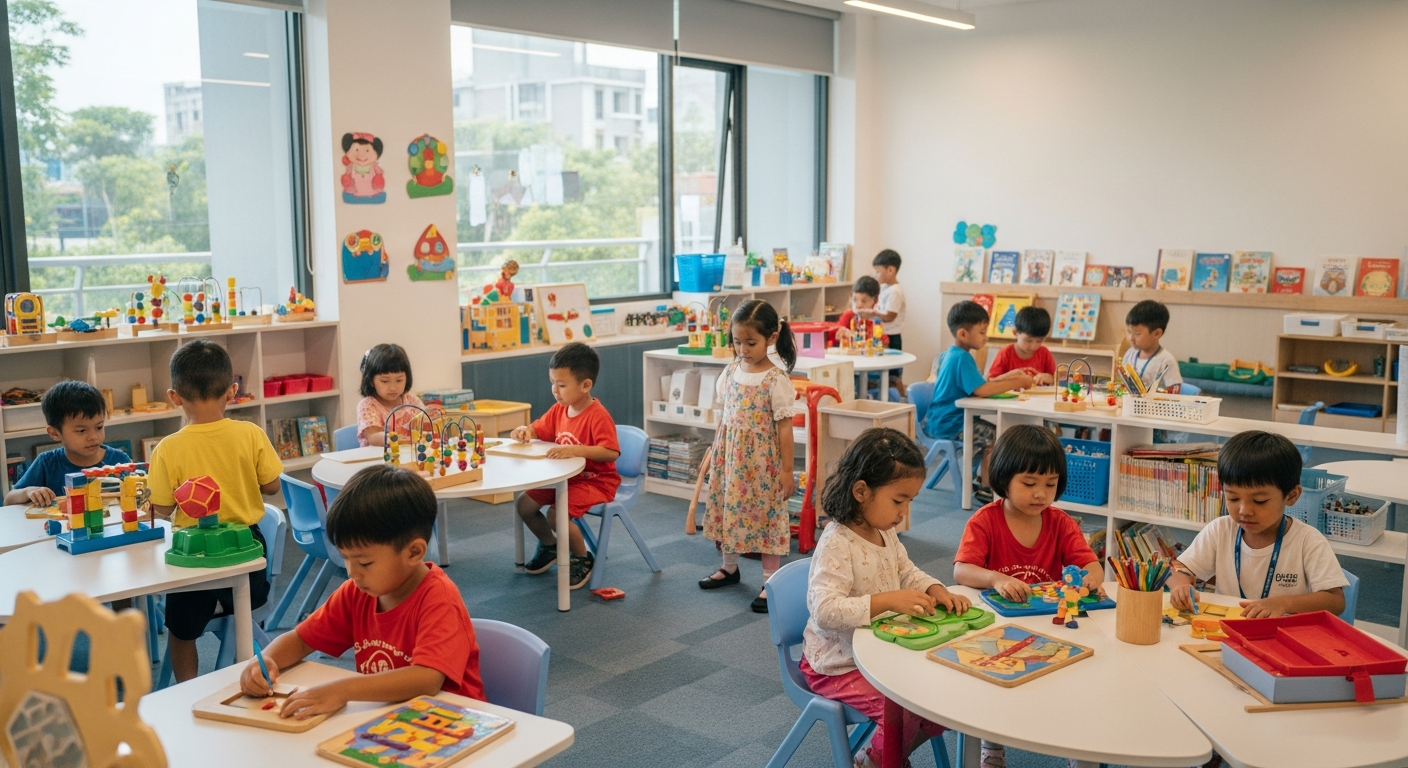
- International Preschool: The focus is almost entirely on social-emotional development. Children learn how to separate from parents, interact with peers, share toys, and follow simple routines. It is about sensory play and discovering the world.
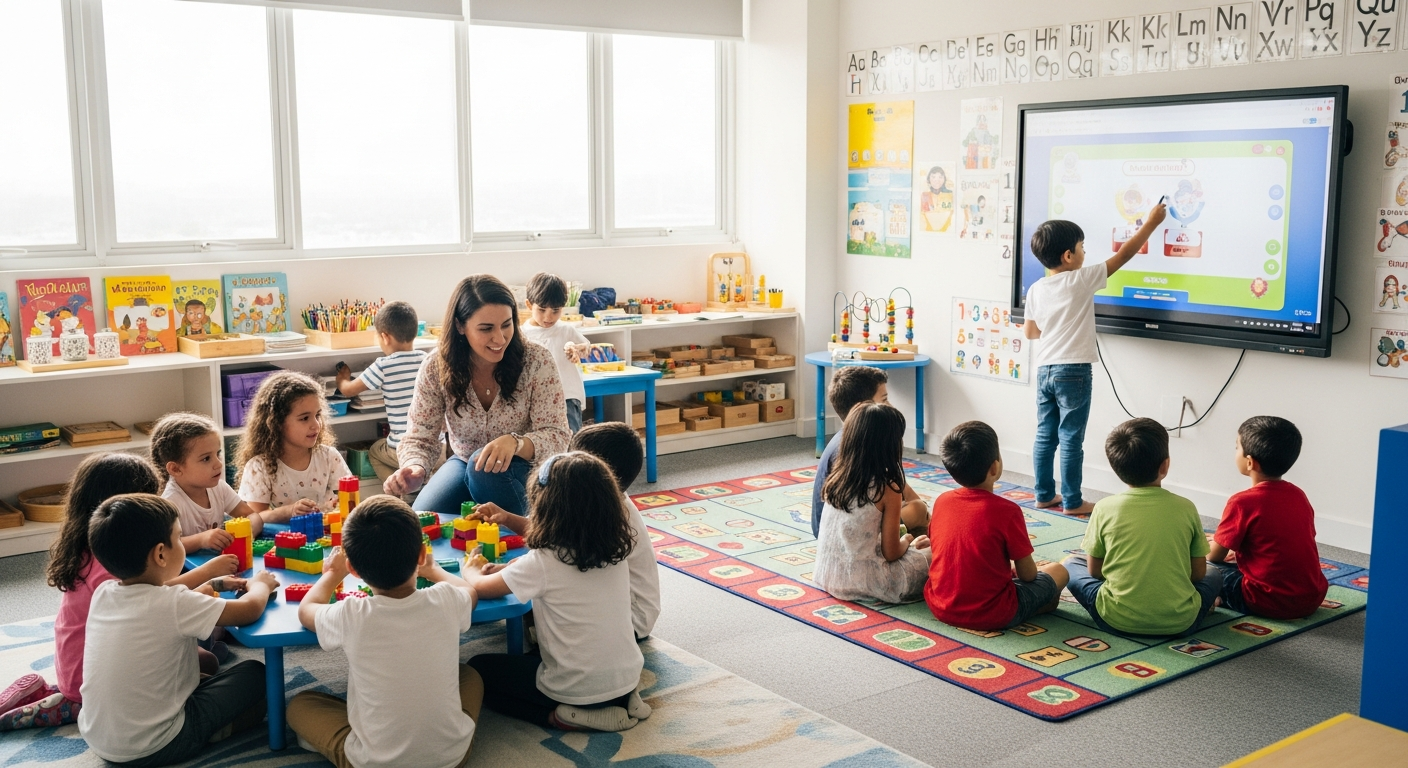
- International Kindergarten: This is the “bridge” to Primary School. The focus shifts toward foundational academics. Children are introduced to structured literacy (phonics), basic numeracy, and critical thinking skills, preparing them for the rigors of Grade 1.
2. Learning Structure and Environment
- Preschool (Play-Based): The environment is often fluid. You’ll see “learning centers” where children can choose between building blocks, painting, or dramatic play. There are no “desk tasks,” and the schedule is highly flexible.
- Kindergarten (Semi-Structured): While still fun, the day is more organized. Students begin to spend time at desks for specific tasks, participate in longer “circle times,” and follow a set curriculum (like the IB Primary Years Programme or Cambridge Early Years).
3. Age Requirements and Potty Training
In the Indonesian international school circuit, age cut-offs are strictly observed:
- Preschool: Typically accepts toddlers as young as 18 months to 3 years old. At this stage, many schools are flexible regarding potty training and offer support for children still in diapers.
- Kindergarten: Usually caters to ages 4 to 6 years (often split into K1 and K2). Most international schools in Indonesia require children to be fully potty trained before entering Kindergarten.
4. Attendance and Commitment
- Preschool: Often offers flexible schedules. Parents can choose 2, 3, or 5 days a week, and many programs are half-day (ending around 11:30 AM or 12:00 PM).
- Kindergarten: Typically a full-week commitment (Monday to Friday). The hours are longer to build the stamina required for a full school day in the years to come.
5. Teacher-to-Student Ratio
- Preschool: Maintains a very low ratio (e.g., 1 teacher for every 4-5 toddlers) to ensure safety and high levels of individual care.
- Kindergarten: The ratio increases slightly (e.g., 1 teacher for every 10-12 students) as children are expected to have more independence and follow group instructions.
Preschool vs Kindergarten — At-a-Glance Comparison
| Dimension | International Preschool | International Kindergarten |
|---|---|---|
| Primary goal | Social-emotional growth and sensory exploration | Academic readiness and structured learning habits |
| Learning style | Play-based, child-led activities | Semi-structured curriculum with guided instruction |
| Typical age range | ~18 months to 3 years | ~4 to 6 years |
| Daily structure | Flexible routines and learning centers | Organized schedule with focused tasks |
| Potty training expectation | Often flexible or supported | Usually required before enrollment |
| Attendance model | Optional days and half-day programs | Full-week commitment with longer hours |
| Teacher-to-student ratio | Very low for close supervision | Slightly higher to build independence |
| Transition objective | Comfort, socialization, early adaptation | Preparation for Grade 1 academic expectations |
Related article: 7 International Preschool Options in Indonesia for Expat Families
Making the Choice: Which One is Right for Your Child?
Choosing between Preschool and Kindergarten in Indonesia often comes down to your child’s developmental stage and your family’s upcoming milestones.
Here is a quick guide to help you decide:
| If your priority is… | Preschool is typically better when… | Kindergarten is typically better when… |
|---|---|---|
| Development stage | Your child is still building social confidence and independence | Your child is ready for structured academic routines |
| Daily rhythm | You prefer flexible schedules and shorter days | You want consistency and full-week engagement |
| Learning focus | Play, exploration, and emotional development | Early literacy, numeracy, and discipline |
| Transition planning | Your family is adjusting to a new environment | You are preparing for primary school entry |
Related article: 7 Best International Schools in Jakarta with Modern Facilities and Detailed Fees
Final Thoughts
In Indonesia’s international school landscape, both Preschool and Kindergarten serve as vital foundations.
While Preschool nurtures the heart and senses, Kindergarten sharpens the mind and discipline.
As an expat parent, the best approach is to visit potential campuses, meet the educators, and consider the commute from your residence.
A shorter commute often means a happier, more energetic student—so be sure to explore the premium residential options near these educational hubs on Rumah123.